Trading Psychology Journal: Why Tracking Trades Alone Isn't Enough
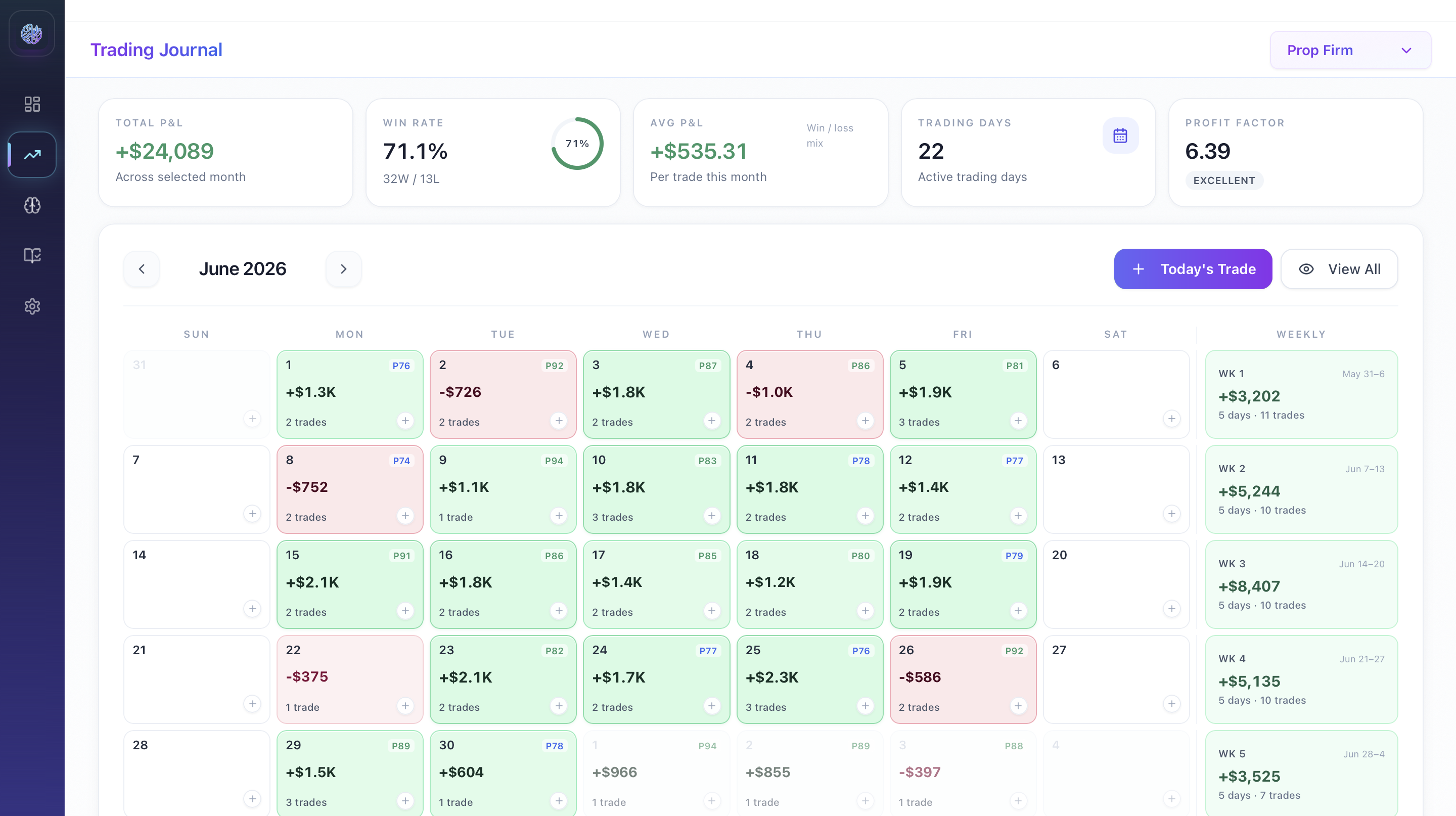
Most traders keep some kind of journal. Entry price, exit price, position size, profit or loss. It's useful data, but it only tells you what happened, never why it happened. The trade that blew up your account on Tuesday and the trade that made you money on Wednesday can look almost identical on paper, even though your mental state going into each one was completely different.
That gap is exactly what a trading psychology journal is built to close.
What a trading psychology journal actually tracks
A normal trading journal is a record of outcomes. A trading psychology journal is a record of the conditions that produced those outcomes. That means logging things like how many hours you slept, how stressed or calm you felt before the market opened, whether you were trading your plan or trading your emotions, and how confident you actually felt in the setup, separate from how confident you wanted to feel.
None of these are soft, feel-good metrics. They are leading indicators. A trader who is exhausted, anxious, or emotionally reactive makes different decisions than the same trader well rested and calm, even with identical technical setups in front of them. Pair this with a trading mindset tracker and the connection between mental state and results becomes much clearer over time.
The variables that matter most
Across traders who track this consistently, a handful of factors show up again and again as predictors of bad decisions.
Sleep is the biggest one. Poor sleep the night before correlates strongly with impulsive entries and early exits driven by fear rather than plan.
Stress level going into the session matters almost as much. A trader carrying stress from outside the market, or stress from a recent loss, tends to revenge trade or oversize positions to make it back quickly.
Emotional state during the trade itself is a third factor. Fear of missing out, overconfidence after a winning streak, and frustration after a loss all push traders away from their actual plan and toward reactive decisions.
Mental clarity and focus round out the list. Distraction and divided attention lead to missed signals and late reactions, even when the trader technically knew what to look for. These map closely to the psychological dimensions that shape trading performance.
How to actually start journaling this
You do not need a complicated system to begin. A simple daily format works fine at first: three or four short questions answered before the market opens, and one or two answered after your session ends. How did you sleep. How stressed do you feel right now on a simple scale. Did you trade your plan today or did you deviate, and if so, why.
The habit matters more than the format in the beginning. Consistency is what turns this from a nice idea into usable data.
Where most people get stuck
The most common failure point is not starting the journal. It is journaling for a week or two, generating a pile of notes, and never going back to look for patterns. A psychology journal only pays off once you can see the connection between your mental state on a given day and how that day actually went. Without that step, it's just an extra chore with no return.
This is exactly the gap MentalBro was built to close. Instead of manually logging and later trying to spot patterns by memory, MentalBro turns your daily check-in into a Psych Score and tracks it alongside your trading results automatically, so the patterns surface themselves instead of staying buried in old notes.
If you have never tracked your mental state alongside your trades before, start today. Even a simple version of this journal will show you things your P&L alone never could.
Related reading
Ready to see your own patterns instead of guessing at them?
Start your free MentalBro trial and get your first Psych Score today.
Start your free MentalBro trialShare this article
Help other traders master their psychology